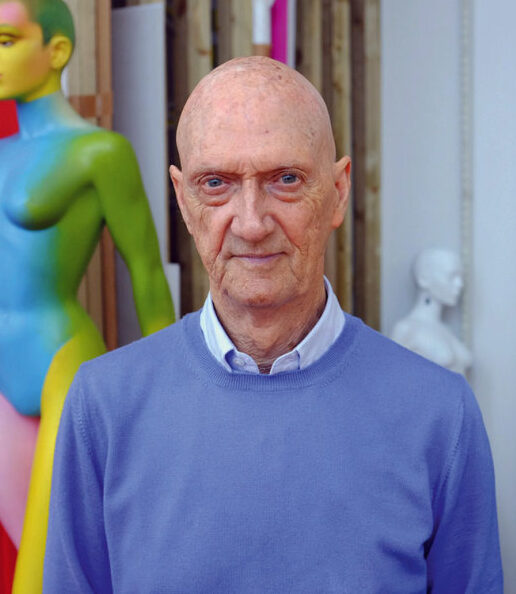
Allen Jones studied painting and lithography at Hornsey College of Art in London before continuing his studies at the Royal College of Art, where he was a contemporary of artists such as David Hockney and R. B. Kitaj. As early as 1961, his work attracted attention at the Young Contemporaries exhibition, which marked the beginning of British Pop Art.
In 1963, Jones received the Young Artists’ Prize at the Paris Biennale, and in 1986, Allen Jones was elected a member of the Royal Academy of Arts, official recognition of his influence and major contribution to British art. From 1990 to 1999, he served as a trustee of the British Museum in London.
Jones has exhibited internationally in solo and group exhibitions, including several personal retrospectives. His works are held in numerous prestigious collections, including those of the British Museum, the Tate, and the National Portrait Gallery in London, the Calouste Gulbenkian Foundation in Lisbon, the Stedelijk Museum in Amsterdam, the Museum of Modern Art and the Whitney Museum of American Art in New York, the Chicago Museum of Art, the Sculpture Garden in Washington, D.C., the Vancouver Art Gallery, and the Nagaoka Museum in Japan.
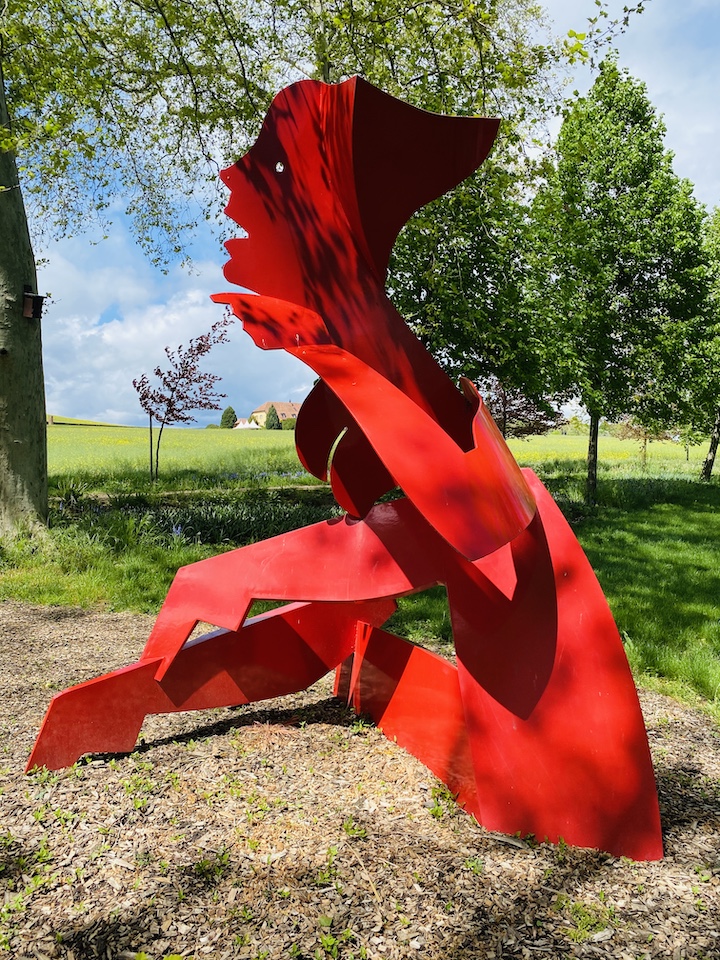
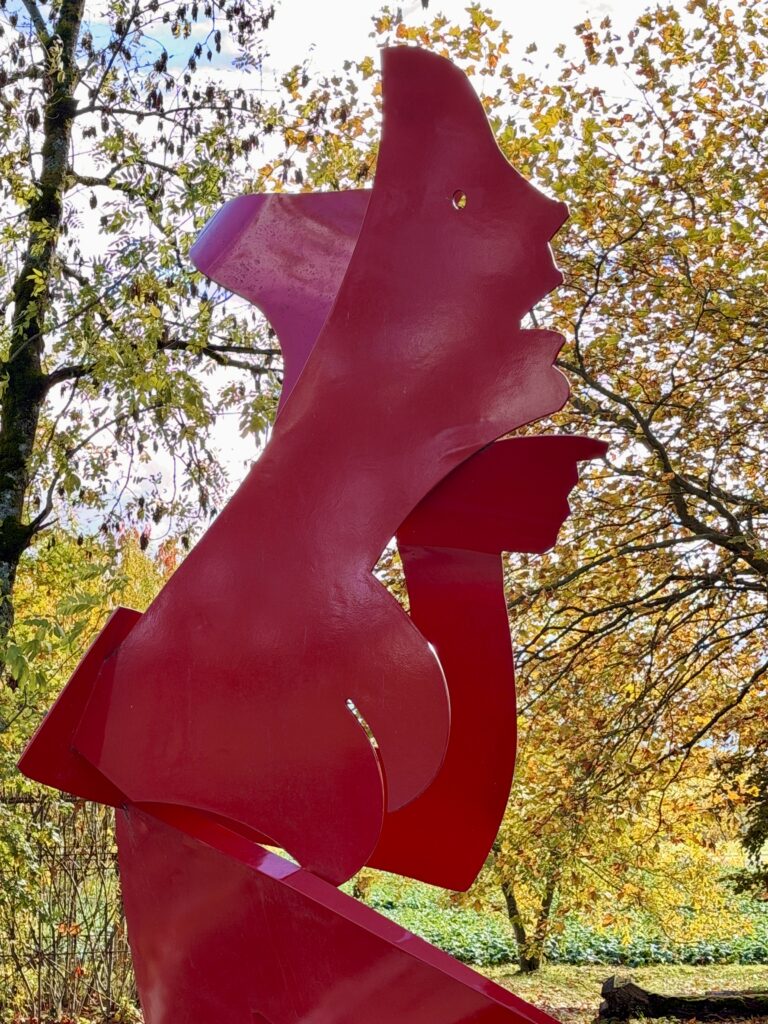
Allen Jones draws inspiration from modern art (Robert Delaunay, Fernand Léger), gestural abstraction (Jackson Pollock), and popular and illustrative art of the 1940s and 50s, merging these influences to create a unique style where figuration and abstraction coexist.