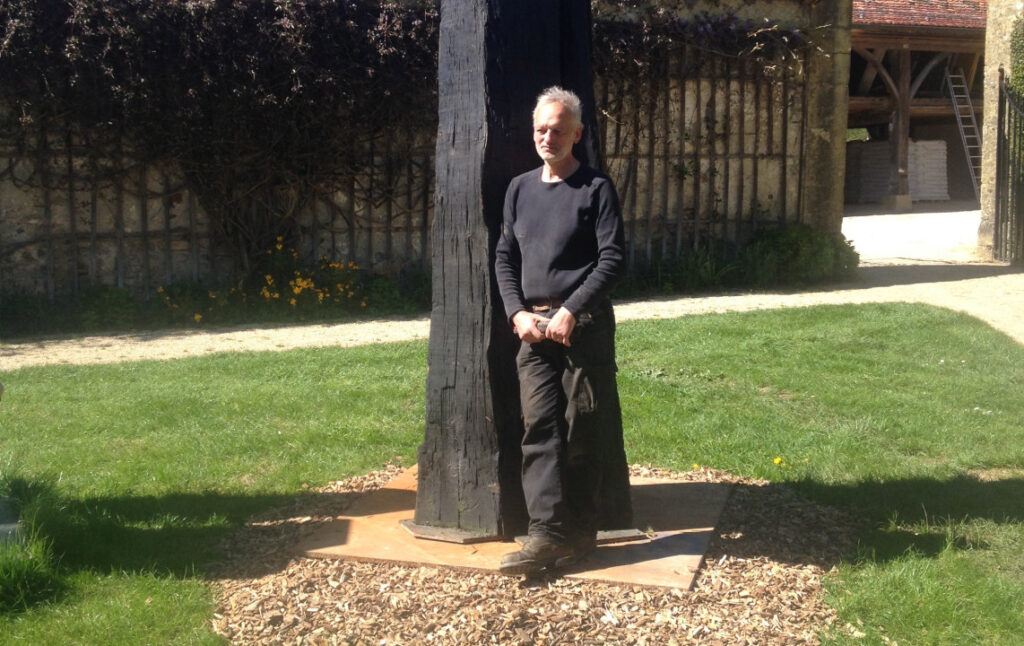
He studied at the School of Fine Arts in Reims (1972-1977) and then at the National School of Fine Arts in Paris (1977-1979). Initially a painter, he experimented with chalk, oxides, and ashes on large canvases. Very quickly, he introduced a more raw dimension by working with charred wood, cement, rebar, and sheet metal. A pivotal stay in the Amazon, in contact with the Caboclo people, led him to fully commit to monumental sculpture. Settled in the Champagne region of France, he developed, from the 1990s onward, a body of work in dialogue with the history of this land marked by the First World War.
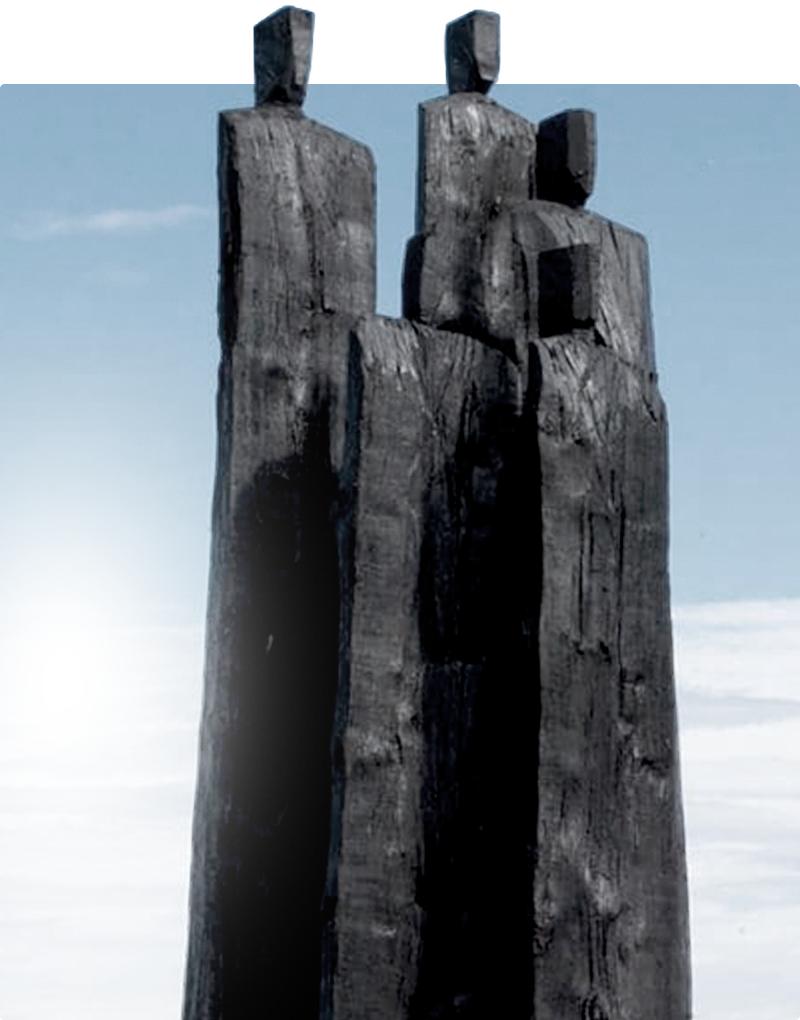
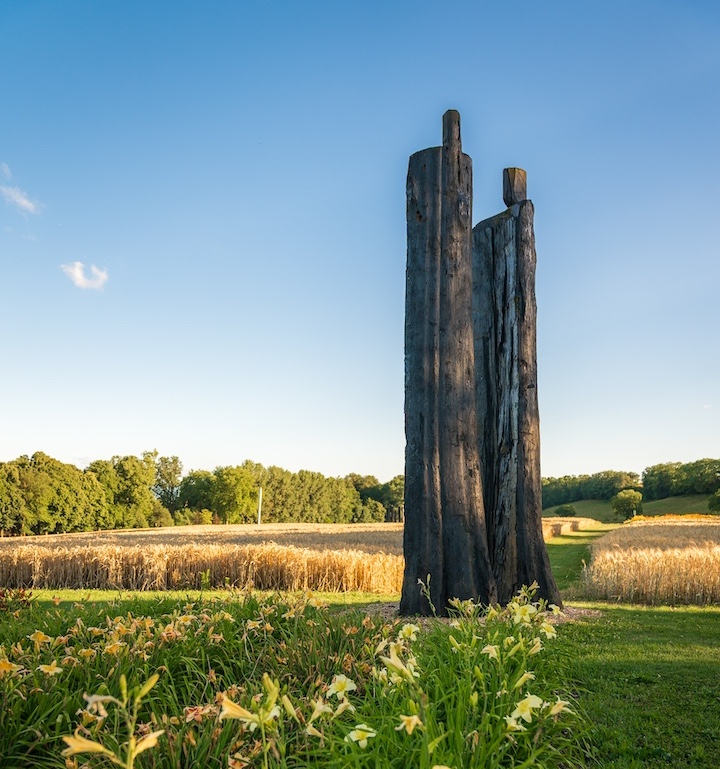
His first sculptures in charred wood were placed in sites steeped in history before traveling around the world. His works can be found at the Echigo-Tsumari Sculpture Park in Japan, the Salomon Foundation in France, the Museum of Fine Arts in Reims, Crow’s Nest in Canada, and in India with In the Path of the Sun and the Moon. Other monumental creations, such as Le Pupitre des Étoiles (The Desk of the Stars) in the Parc de Sceaux, illustrate his engagement with public space. His work has been presented in numerous private collections and institutions in Europe, America, and Africa.
Lapie develops a body of work deeply connected to individual and collective memory. His dark figures, without arms or faces, evoke universal human silhouettes, both spectral and reassuring. Created from raw tree trunks that he sculpts and chars, they appear as timeless sentinels, embodying the presence of humanity in the landscape. By investing in historically significant locations, his sculptures question our relationship to time, nature, and the human condition, imposing a visual language that is both simple and universal.