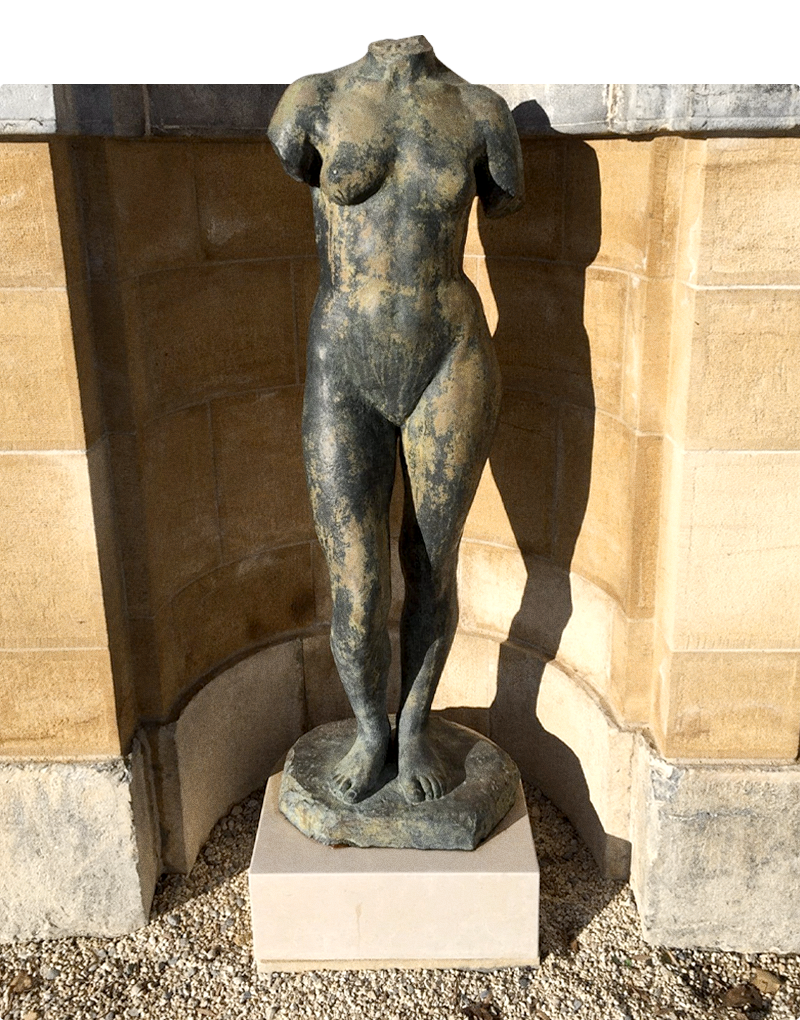

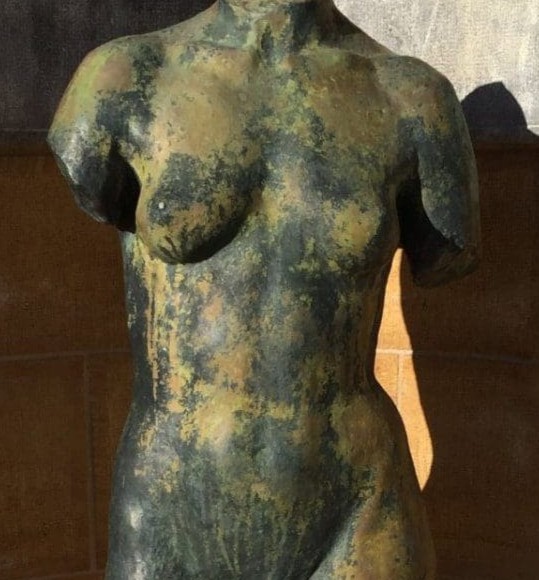
Drawn to the visual arts from a young age, he pursued a dual education at the School of Applied Arts in Paris and then at the National School of Fine Arts, where he became a student of Robert Wlérick and Charles Malfray, two major figures in modern sculpture. A recipient of the Casa de Velázquez scholarship in Madrid (1946-1947), he broadened his artistic horizons through contact with Spanish culture.
As early as 1939, he was awarded a bronze medal at the Salon des Artistes Français, confirming the unique quality of his artistic vision. His work is characterized by a constant exploration of form and volume, marked by clean lines and a tension between abstraction and figuration.
Based for several decades in his Parisian studio in the 14th arrondissement, Georges Coulon completed numerous public commissions, including a terracotta relief for a kindergarten in Épinay-sur-Seine, a copper fountain in Nevers, and “The Dolphin” in Rosny-sous-Bois.
In the late 1960s, disappointed by the changing tastes of the public, which was turning away from figurative art, Georges Coulon gradually abandoned sculpture to dedicate himself to painting. He even destroyed some of his works, which his wife and his friend, the sculptor Volti, saved and hid. It was only shortly before his death in 1990 that he discovered the secret of the preservation of his work. His creations, though few in number, remain powerful and of great elegance.