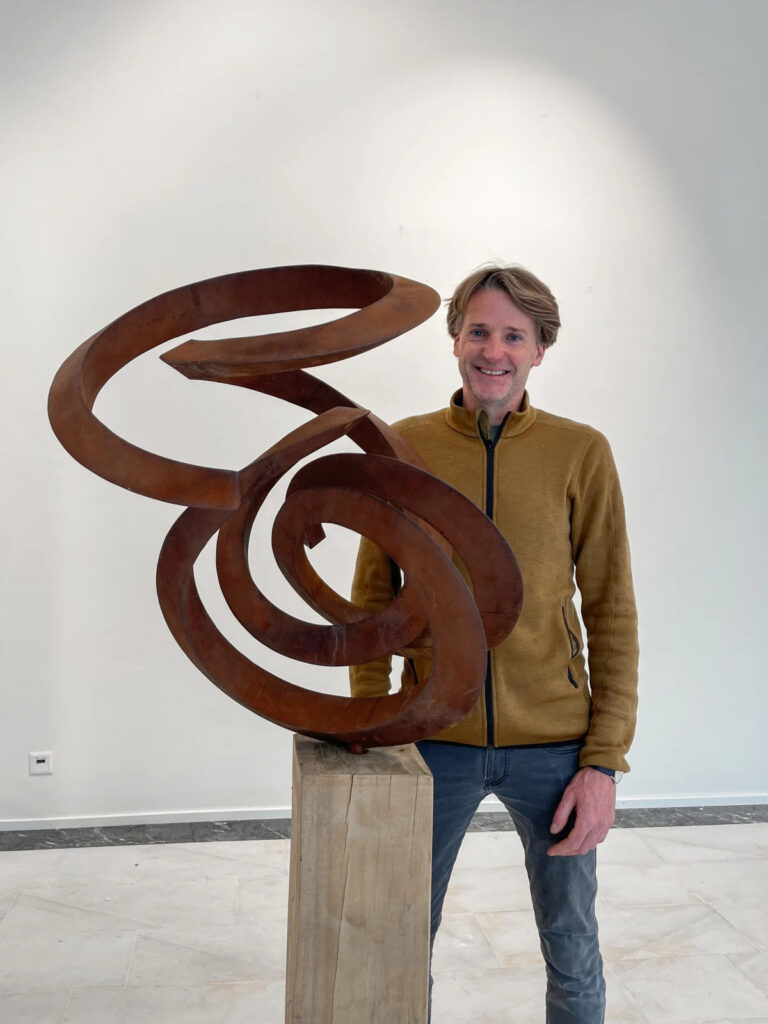
A graduate of the Tilburg Academy of Fine Arts in 1992, he initially experimented with various materials before dedicating himself exclusively to steel, which he considers the most suitable medium for expressing his ideas. His work has been featured in numerous solo and group exhibitions worldwide, including Art Basel and the Swiss Triennial Festival of Sculpture in 2015, the Schlosspark in Cologne-Stammheim, and the Gunzburg Sculpture Park in Germany.
Obels has received several awards, including First Prize at the 6th National Juried Exhibition in New York in 2004, and he was nominated for the Altoid Award by the New Museum of Contemporary Art in New York in 2008. His works are part of prestigious collections, including the Wayne State University Art Collection, the Grey Art Gallery in New York, and the Farjam Collection in Dubai.
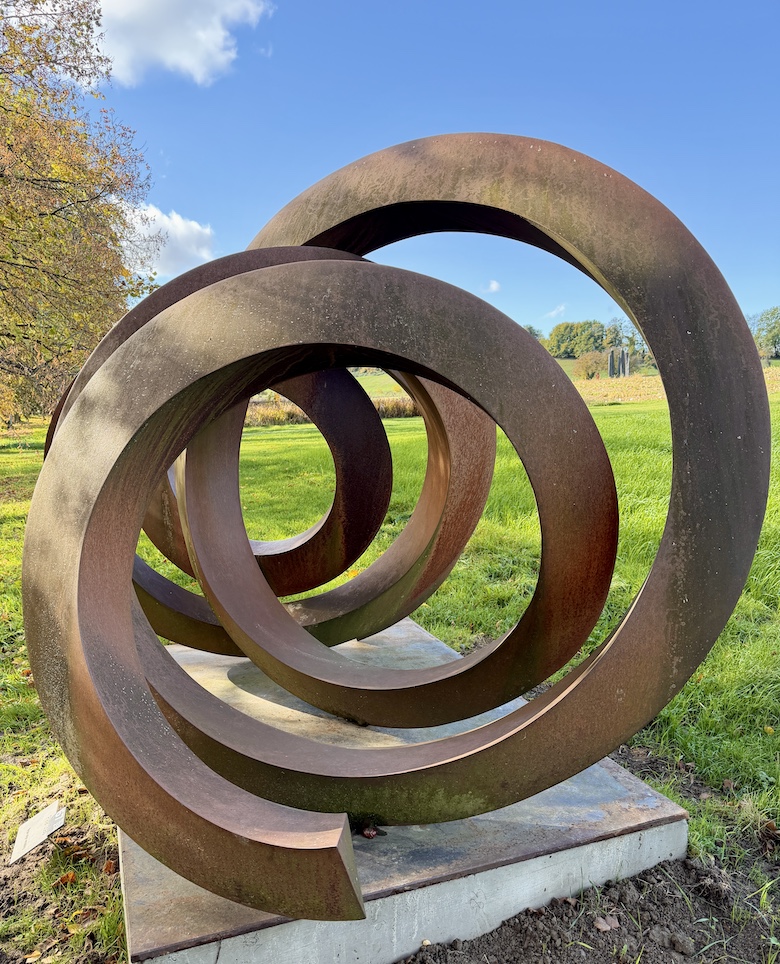
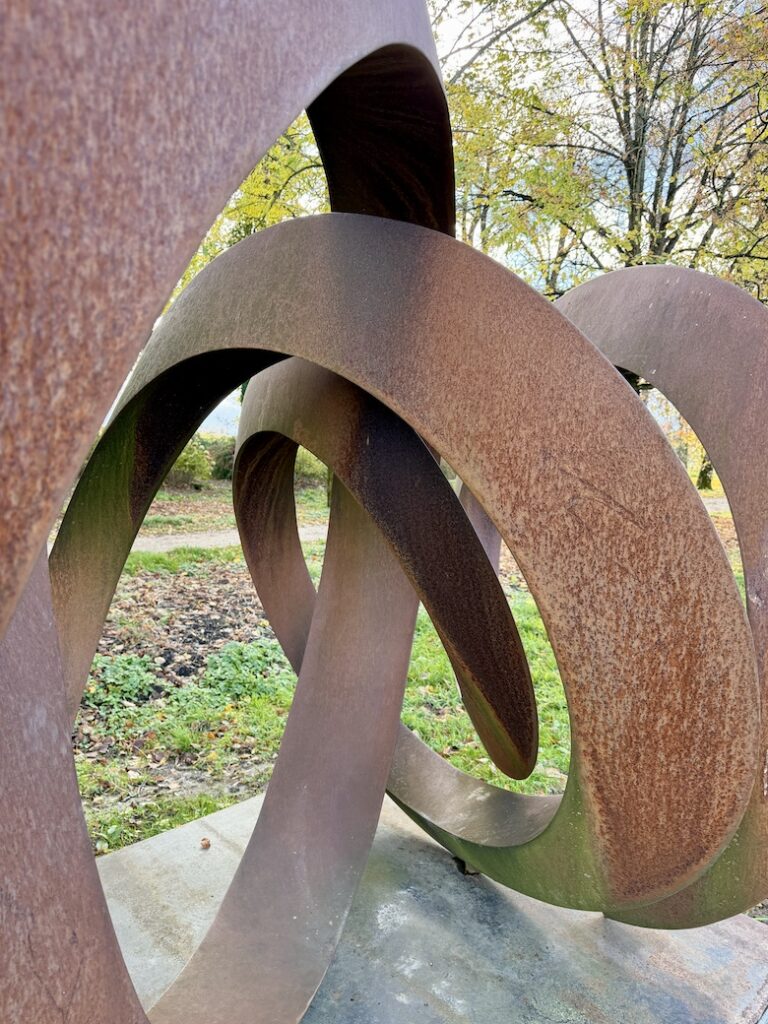
Pieter Obels’ inspiration stems from spontaneity and improvised gestures. Rather than following a strict plan, he allows the Corten steel to transform under his hands, becoming airy and fluid forms. His sculptures invite the viewer to move around them, exploring every angle, thus revealing the movement and lightness hidden within the material. Each work then becomes a living dialogue between matter and the eye, a sensory experience where the steel almost seems to dance.